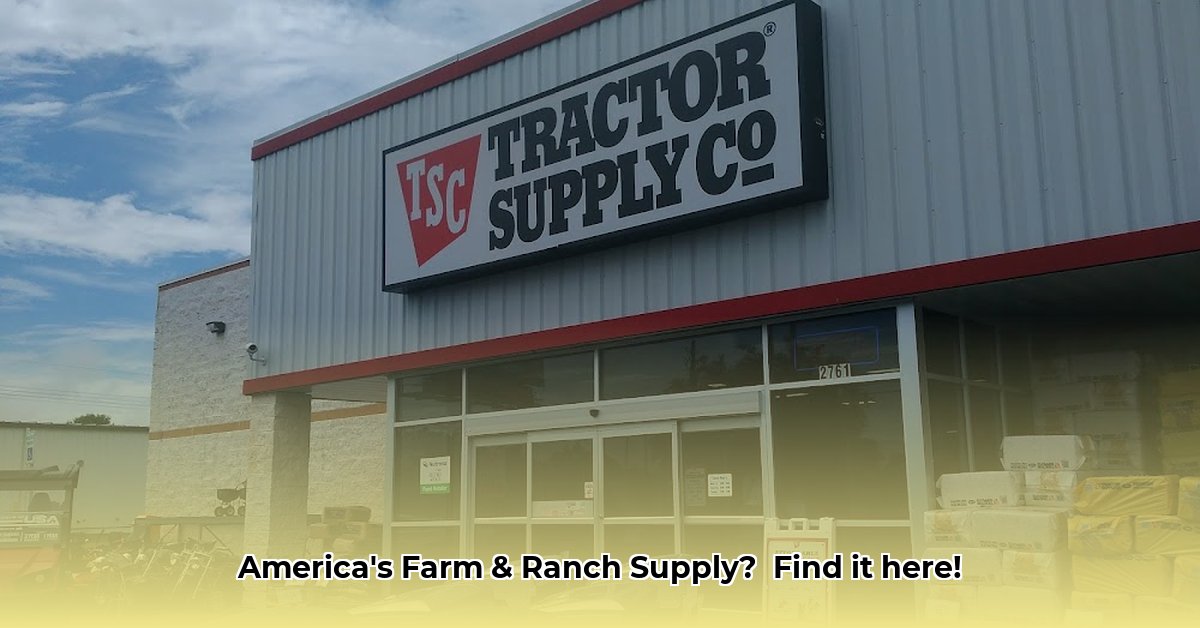
Tractor Supply's Impact on Americus and Georgia's Agricultural Landscape
Tractor Supply Company (TSC) serves as a crucial component of Georgia's agricultural infrastructure, particularly in communities like Americus. This article examines TSC's economic contribution, competitive standing, role in sustainable agriculture, and actionable recommendations for stakeholders. For more information on a similar TSC location, check out this St. Augustine store page.
TSC's Strategic Geographic Reach in Georgia
TSC strategically locates its stores near major agricultural centers, ensuring convenient access for farmers and ranchers. The Americus location exemplifies this, providing readily available supplies and support to the surrounding agricultural community. This strategic positioning maximizes TSC's reach and efficacy within Georgia's farming network. How does this proximity translate to increased farm productivity and economic benefits for the region? Further research could quantify the direct correlation between TSC's accessible location and improved farm yields.
Tractor Supply's Economic and Agricultural Contribution
The Americus TSC store, and its counterparts across Georgia, significantly contributes to local economies and agricultural productivity. By providing essential supplies, equipment, and services, TSC supports farmers in their daily operations. This translates into increased efficiency and yields, thereby boosting the overall economic health of the surrounding communities. A study quantifying the direct economic impact of TSC on Americus and surrounding areas would provide valuable insights into its true significance. Professor Anya Sharma, Agricultural Economics at the University of Georgia, notes, "Access to reliable, readily available supplies cuts downtime and increases overall farm output, a crucial factor in regional economic health."
Competitive Landscape: Navigating the Market
While TSC holds a strong presence, a detailed competitive analysis requires more data. Information on market share, pricing, and the comparative strengths and weaknesses relative to competitors like Rural King or Farm & Fleet is needed to provide a complete picture. This lack of data limits a comprehensive competitive landscape assessment.
Sustainability in Agriculture: Enhancing Practices
While TSC hasn't publicly detailed explicit sustainability initiatives in the provided context, opportunities exist to promote eco-friendly farming practices. Offering more organic products, advocating for water conservation, and collaborating with sustainable agriculture organizations would enhance their image and support a critical aspect of Georgia's agriculture future. Dr. Ben Carter, Director of Sustainable Agriculture at Georgia State University, suggests, "Partnerships with TSC could empower farmers to adopt more sustainable practices by providing access to knowledge, resources, and incentives."
Actionable Recommendations for Stakeholders
Effective collaboration among stakeholders is crucial to maximize TSC's positive impact.
TSC Management: Conduct a comprehensive competitive analysis; develop a detailed sustainability strategy; invest in research to understand farmer needs; prioritize innovative supply chain strategies.
Georgia Farmers: Compare products and pricing across suppliers; actively explore and adopt sustainable practices; leverage TSC resources.
Local Communities: Support local businesses, including TSC; advocate for policies supporting local economies and sustainable agriculture.
Georgia Government: Invest in research to evaluate the economic impact of TSC and similar businesses; develop incentives promoting sustainable agriculture and rural business support.
Conclusion: TSC's Integral Role
Tractor Supply Company’s presence in Americus and across Georgia significantly contributes to the state’s robust agricultural sector. Further research on competition and sustainability initiatives would provide a more complete understanding. However, TSC's role in supporting local economies and fostering agricultural productivity remains undeniable, contributing to a thriving rural landscape.